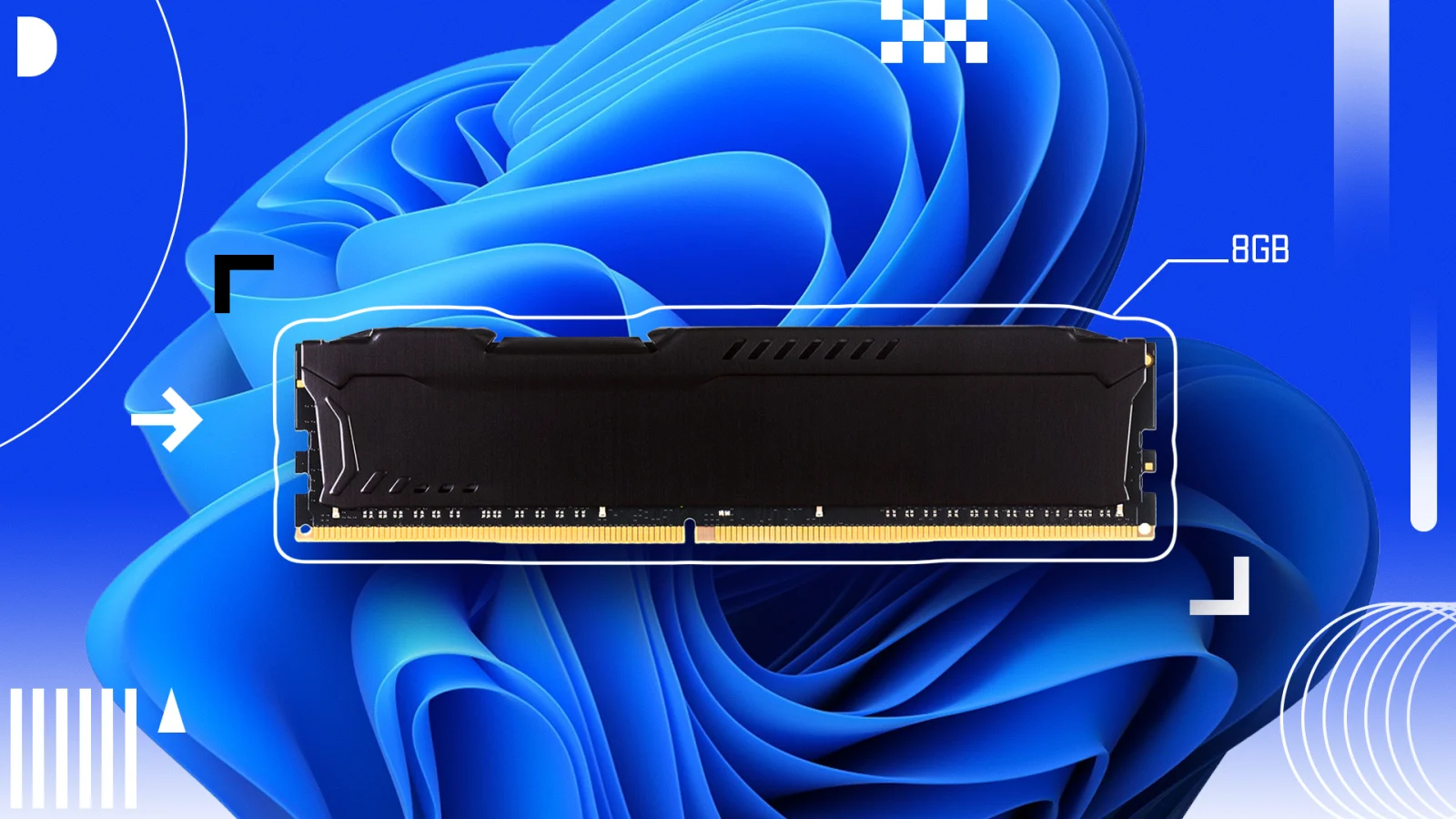
Before you fall for lower starting prices on new Windows 11 laptops, know this: 16GB of RAM is the absolute minimum you should accept. Microsoft is selling an updated Surface Laptop with 8GB of RAM, and PC manufacturers will undoubtedly follow with similarly specced models due to the ongoing RAM price crisis and success of Apple’s MacBook Neo. The Verge recently reviewed this version of the Surface Laptop and concluded that 8GB of RAM wasn’t enough to ensure a good Windows experience, so I decided to dig into that claim myself on the software side. We generally recommend 16GB of RAM as a baseline, so I wasn’t especially optimistic that Windows 11 could escape its reputation for poor performance with limited memory. In short, I agree that Windows 11 isn't ideal on machines with just 8GB of RAM. The OS struggles in easy-to-miss ways after opening a few tabs. During light multitasking scenarios, it starts swapping data to disk, slowing down apps to preserve desktop performance. And then Windows becomes dramatically slower when you run powerful software, such as Adobe Photoshop. Here are the full details of my tests. Testing the Best-Case Scenario: A High-End PC, Severely Nerfed For testing, I limited my Windows 11 desktop PC to 8GB of RAM via the msconfig tool. My computer otherwise has a powerful AMD Ryzen 9 9900X CPU and a speedy Samsung 990 Pro PCIe 4.0 SSD. These are generous specs: In the real world, on a low-end laptop with 8GB of RAM and a slower CPU, Windows 11 might slow down even more than I outline below. The Task Manager Tells the Truth According to the Task Manager, Windows was using about 6.6GB of RAM on a fresh boot with just a few startup applications. My PC appeared to be functioning normally. File Explorer and the Windows desktop worked fine, for instance. But some issues began to appear after I started launching applications. 8GB of RAM is only enough space for the operating system and a few browser tabs (Credit: Microsoft/PCMag) In testing, I first opened Google Chrome and browsed PCMag in a single tab. Performance remained snappy. Then, I opened six tabs, one of which had a YouTube video playing. Google Chrome performed well in this scenario. As long as I didn’t leave my browser, this workload didn't cause problems. Oddly, however, the Task Manager showed available system memory improving as I opened more browser tabs. This was the first sign that Windows 11 had begun to swap data from my PC’s RAM to its SSD. In essence, Windows 11 moves data from RAM to a page file in system storage, transferring it back and forth as necessary to compensate for a lack of RAM. It's not encouraging that it had to do this so early on in my tests. Light Multitasking Triggers a Quiet Game of SSD Swap-Fest To push my PC further, I launched Spotify. Despite being a web-based application, Spotify used only about 220MB of RAM during testing to play music. I continued streaming a video and found I could browse the web in Google Chrome as before. I also launched Slack, which used another 657MB of RAM. Music and video streaming continued without stutters, and the computer remained usable. However, Windows 11 had already begun silently limiting the PC’s performance. Windows 11 is noticeably slower with a few applications open (Credit: Microsoft/Google/PCMag) When I navigated to new web pages in Google Chrome, clicked around in Spotify, or just restored the Slack window after it was minimized, for example, these actions felt noticeably slower. Why? Windows 11 was quietly shuttling data back and forth between RAM and the SSD as I switched between apps. If you didn’t know what you were looking for, you might just think that applications or web pages were a little slow. Again, this remains a very reasonable workload, so these slowdowns are indicative of serious optimization issues. High disk usage is often a sign Windows is swapping a running process’s data to disk (Credit: Microsoft/PCMag) Pro Apps Turn Windows 11 Into a Reload-and-Wait Simulator I also tested Adobe Photoshop on my configuration, which remained functional while I edited a small image. However, Photoshop put major pressure on system memory. With Photoshop open, switching between running applications felt like a chore. When I switched from Photoshop back to Slack, Slack showed a white screen for a second while it swapped back to RAM. Google Chrome also unloaded tabs in the background to free up memory, forcing them to reload when I clicked them. Professional applications tend to use large amounts of RAM anyway, and they perform noticeably worse when Windows starts to swap data between RAM and storage. For instance, a virtual machine I ran in VMWare Workstation was extremely slow, with Windows slamming my SSD with writes the entire time. You should expect a similar experience with video editing software and the like. To be fair, the MacBook Neo also struggles with demanding workflows, so macOS isn't immune to these issues either. Recommended by Our Editors 14 Easy Fixes to Make Windows 11 Feel Faster I Stress-Tested Apple's $599 MacBook Neo With Lightroom and 8K Video. Here's What Happened RAM Reality Check: How Much Memory Does Your PC Actually Need in 2026? Despite these performance issues, Windows 11’s page file behavior remains useful overall. It means you can open lots of applications, even on a PC with 8GB of RAM. They might be very slow, but they will run. The fact that Windows 11 also effectively avoided major slowdowns in my tests is technically impressive. Still, I wish the OS would show a clear warning when a lack of RAM is slowing down your PC, rather than forcing you to monitor the Task Manager. Windows 11 can accommodate Adobe Photoshop with 8GB of RAM, but it drags down OS performance (Credit: Microsoft/Adobe/PCMag) Don't Settle for Budget Specs on a Brand-New PC Unfortunately, people upgrading from an older PC might think the experience I described above with 8GB of RAM is just what a modern Windows 11 machine should feel like. However, Windows 11 runs much better with 16GB of memory. If you’re buying a desktop PC or laptop, that should be your minimum. Don’t assume an 8GB machine delivers a good experience just because Microsoft is selling a configuration with that amount. Although Microsoft says it’s making Windows 11 more efficient in 2026, I don't expect the experience with 8GB of RAM to improve dramatically. Even if the company achieved massive memory savings, third-party applications remain a major problem because many use memory-hungry web-based technologies. The Windows team is investing in memory-efficient native applications, but others are still creating web-based apps for services, such as Copilot, Microsoft Teams, and the new Outlook. If you want to avoid frustrating slowdowns, paying for more RAM remains the best solution.