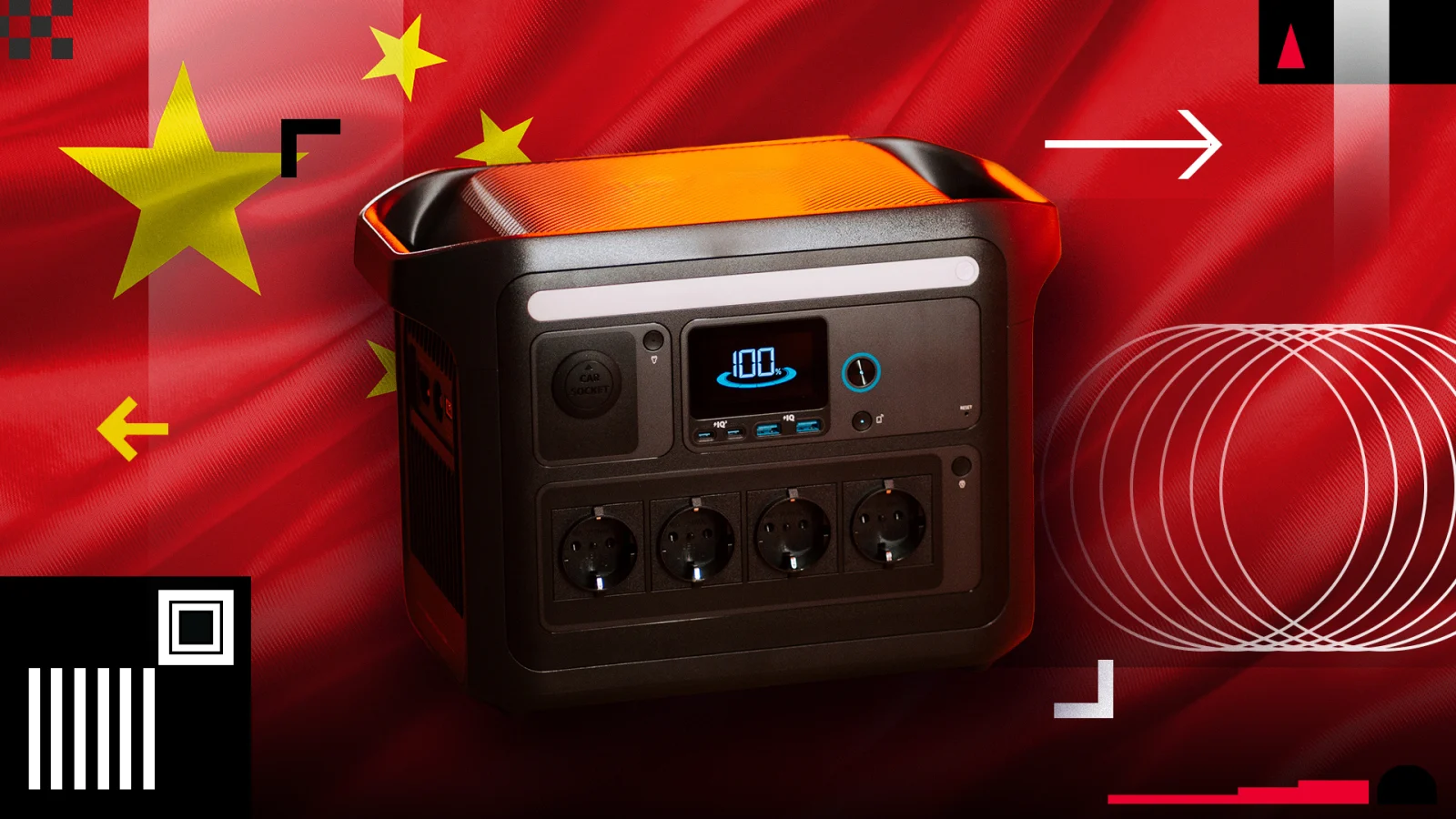
The ban on robot vacuums is getting all the attention, but the FCC's decision targeting connected power inverters could reshape the future of home batteries and residential solar across the US. When a new portable power station arrives for review, I wheel it or lug it into my garage and connect it to rows of solar panels outside that have somehow escaped the hawk-like attention of my HOA. It’s a familiar ritual to me now. I measure how much solar energy the units can harvest versus what the manufacturer promises. Afterward, I overload the inverter—the component that converts the direct current (DC) battery voltage back into usable alternating current (AC)—by plugging in everything I have. I hook up computers and yank out the power cord, watching my monitors for glitches to test the inverter's Uninterruptible Power Supply (UPS) capabilities. I watch how the inverter handles heat, monitor how loud its fans are, and keep tabs on how much battery power it can efficiently deliver to the three-prong plug. Manufacturers hype up the batteries of these units, but the real star is hidden inside the case. The inverter has become the electronic heart of nearly every portable power station, home battery backup system, rooftop solar installation, and increasingly, the smart electrical grid itself at an institutional level. Until last week, I worried about inverter efficiency, standby power draw, and transfer times measured in milliseconds. And the HOA overlords, from time to time. Now, I’m losing sleep wondering whether Americans like me will be able to buy them at all. This week, the Federal Communications Commission voted to add foreign-produced connected power inverters to its Covered List, alongside foreign-made robot vacuums and robot lawn mowers, citing national security risks. The power inverter action is the kind of announcement most people would probably scroll past. I couldn’t. Because if the FCC ultimately interprets the term “connected power inverter” broadly, the decision could reach far beyond utility-scale solar farms and into one of the fastest-growing categories of consumer technology I’ve spent the last year reviewing. And that would be a major blow to all Americans. The Stealthy Rise of Energy Freedom Over the past few years, I’ve watched portable power stations evolve from expensive camping gadgets into something far more significant. The people buying them today aren’t just overlanders, RV owners, or army surplus prepper survivalists. They’re homeowners concerned about power-hungry data centers, an aging and increasingly unreliable grid, and conflicts in places like the Strait of Hormuz. Record numbers of homeowners are purchasing these expandable systems to lower their electric bills. Families install them to prepare for hurricanes and ice amidst increasingly violent and more frequent storm systems. Remote workers are protecting their internet connections. Retired and elderly communities are safeguarding their medical equipment and cold storage medications. A Jackery HomePower 3600 Plus portable power station with an expansion battery and solar panels (Credit: Michael Lydick) That shift is happening alongside an explosion in residential solar and battery storage. I’ve never seen as many homeowners as I do now pairing rooftop or ground-mounted solar with batteries to store electricity during the day and use it after sunset, during peak rate hours, or when the grid goes down. Utah, alongside five other states, just legalized balcony solar microinverters as the technology gains traction amid evolving regulations, allowing consumers to reduce their reliance on the electric grid as they seek more affordable options. Whether it’s the utility-scale solar farm feeding thousands of nearby homes or a homeowner charging a portable battery from a few solar panels angled up on a frame they build with wood from The Home Depot, they all share one indispensable component: None of these systems works without an inverter. That’s what makes the FCC’s latest action so consequential. It’s not simply regulating a piece of hardware. It’s reaching into the heart of America’s emerging home energy ecosystem at a critical moment in its infancy. Where Tesla Beats Edison in Your Home If batteries are the fuel tanks of the clean energy revolution, inverters are the engines that make it usable. Solar panels and lithium iron phosphate batteries produce DC electricity, but nearly everything in your home, from refrigerators and lights to computers and Starlink dishes, runs on AC. Thomas Edison wanted America to be DC-based, but Nikola Tesla’s vision for AC won out. The inverter performs the conversion, 60 times a second, transforming stored energy from batteries into home-consumable power. In a grid system, it does more than that. Smart inverters have internal circuitry that communicates with batteries, solar panels, utilities, and homeowners, balancing power flows, managing battery charging, communicating with the grid, and receiving firmware updates over the internet. That connectivity is precisely what has drawn the FCC's attention. An inverter is no longer just a box that converts Edison electricity to Tesla electricity. It’s a networked computer that controls the flow of energy between homes, batteries, and the grid. Millions of Americans are installing connected energy systems, and the inverter has quietly become one of the most important and least understood pieces of infrastructure in the country’s transition toward a more decentralized electric future. Powering my refrigerator from the Bluetti Apex 300 Versatile Power Station (Credit: Michael Lydick) Three Words That Could Block Your Next Generator On July 28, the FCC expanded its Covered List to include “connected power inverters produced in foreign countries,” following a national security determination by an Executive Branch interagency body. Under the FCC’s equipment authorization rules in ET Docket 21-232, newly covered products cannot receive the FCC approval required for many connected electronic devices to be imported or marketed in the US. According to the FCC, these devices were added after agencies determined they “pose an unacceptable risk to the national security of the United States or the security and safety of United States persons.” Curiously, the order doesn’t prohibit Americans from using inverters already on the market, nor does it recall existing products that are already connected to critical infrastructure. Instead, it targets future equipment authorizations, making the FCC a gatekeeper for what may become one of the fastest-growing sectors of the home energy economy. How broadly the FCC interprets its own language will determine how far downstream the bans will extend and how far from industrial grids to home-based power systems the effects will reach. Three words—connected power inverter—will determine whether millions of garages, basements, and RVs will have an exit ramp off the grid and rising energy costs. Can a Solar Inverter Really Be Weaponized? On its face, the government's concern isn't difficult to understand. Modern inverters are no longer passive electrical devices. They're internet-connected computers that happen to control the flow of electricity. Many receive over-the-air firmware updates, communicate with cloud services, and allow owners to monitor or control their systems remotely through smartphone apps. Screenshots of the EcoFlow Delta 3 Max Plus companion app (Credit: EcoFlow/PCMag) The Republican Study Committee proposed the ban to President Trump, alleging that its experts had discovered hidden communication devices in an undisclosed number of inverters and batteries that could be controlled remotely. Anonymous sources interviewed by Reuters wouldn't disclose which models were identified as having vulnerabilities, nor how many models were examined or tested for independent third-party verification. The allegations are that foreign firms could “turn off the inverters or use them to collect and exfiltrate data, facilitate remote access and surveillance by foreign government actors, or be otherwise exploited through a cyberattack.” These are serious concerns, particularly as utilities increasingly depend on distributed solar and battery systems to support the electric grid. At the same time, the government hasn’t publicly identified a case in which consumer solar or residential battery inverters here at home have been used to carry out any such attack. Without a manufacturer’s model number to independently test and verify, or a single case of identifiable malfeasance on record, the FCC’s actions are best understood as a preventative measure of this administration, publicly positioned as a way to reduce an unacceptable future risk that could lead to a crisis with possible hidden political motivations in what could arguably be defined as a terse relationship with China and its growing manufacturing prowess. Recommended by Our Editors FCC: Ban on Foreign-Made Robots Includes Robot Vacuums US Drone Ban 2026 Explained: The FCC Rules on DJI, Autel, and What's Still Legal The US Used to Demand the Best Tech. Now We Ban It Who Profits When Foreign Inverters Get Banned? The FCC insists this is a national security issue and decision, just as it maintains that DJI drones and cameras are a national security issue. And foreign-manufactured routers like TP-Link (Except Starlink routers, for some reason, even though they are manufactured overseas). Over the past twelve months alone, the once docile FCC has lowered its sights on extremely large and profitable market segments, each time imposing similarly restrictive bans, citing national security concerns with equally vacuous or unverifiable evidence of nefarious activity. There’s currently no US company that can fill the gap and replace the supply chain at an affordability level that’s made this [energy] revolution and these choices possible. Critics argue that the pattern raises a legitimate policy question. Beyond protecting critical infrastructure, is Washington also using equipment authorization as a form of international industrial policy, giving domestic manufacturers time and space to compete in markets long dominated by Chinese production? That question gained additional attention after Donald Trump Jr. joined the board of Unusual Machines, a company positioned to benefit from the DJI drone ban, even as officials maintained the policy was driven by national security concerns. Critics argue that the actions are promoting players with advanced knowledge of the bans to the front of the American manufacturing line. Most recently, when President Trump purchased $5 million of shares in Axon, the company that makes tasers, just prior to ICE awarding Axon a $200 million contract for the non-lethal handheld weapons. Whether it’s a coincidence, a good industrial strategy, or both is debatable. What’s harder to dispute is that the FCC, once viewed as the country’s communications regulator, has become an increasingly powerful and unusual player in determining which technologies Americans are allowed to buy and who gets to sell them to them, with little to no regulatory oversight. America Has No Plan B I don’t normally lose sleep over regulations. Markets change, and technologies evolve. Some companies behind the products I review won’t be around next year, with new ones in their place. What worries me is that I’ve spent the last year watching Americans quietly change the way they think about electricity—people who’ve found ways to escape the power company’s grasp and control of their finances. I’ve had meaningful conversations with couples in the aisle at Costco where these power stations (the vast majority of which are made in China) are being sold. Mostly, these are people who want lower bills, freedom from control, resilience, or all three. These options don’t exist without inverters. And there’s currently no US company that can fill the gap and replace the supply chain at an affordability level that’s made this revolution and these choices possible. If the FCC believes connected inverters represent an unacceptable national security risk, then we should have an open and honest discussion about it. Put the units on a bench and offer bounties on publicly disclosed vulnerabilities, like Apple does with its operating systems. If we’re banning equipment from China, then we need a realistic plan for who will build the inverters that won’t be coming in anymore, how quickly that can happen, and how much it will cost consumers. Otherwise, we risk slowing down one of the most promising shifts toward the cleaner, more resilient, and more decentralized energy future the original Tesla dreamed of.